
Aging Together, Dementia, Friendship, & Flourishing Communities
by Susan H. McFadden, and John T. McFadden
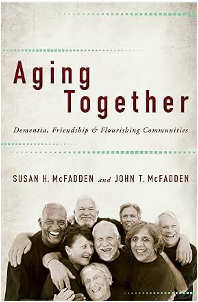 Our aim in this book is to present a radical view of friendship that is not based on obvious reciprocity or shared memories. We usually assume that one of the most important components of a friendship is that another person has known us through time. Friends help us to know who we are; they represent a part of our selfhood. However, when considering relationships with persons who have dementia, we are forced to ask how it is possible to be a friend with someone who does not remember us from moment to moment, even though together we may have spun a web of friendship over many years. Can we still be friends? And, can we make new friends with persons with dementia in points in the dementia process, persons who may not be able to put together a story about how we met, what we have done together, and why we are important to each other? Can any meaning be gained from cultivating such friendships?
These questions will become more pressing in the coming years as the greatest number of persons in human history enters old age. Unfortunately, we live in a time when we separate persons from one another in later life—psychologically, socially, and physically—by using criteria based on brain health. It is not hard to tally up the positive ways friends who age successfully enrich our lives. But, is it possible that friendship with persons who have dementia—either those we have known a long time or persons newly met—might add meaning to the experience of aging? The answer is yes, and this book aims to show how this kind of friendship is possible.